What Is A Special Purpose Machine (Spm)?
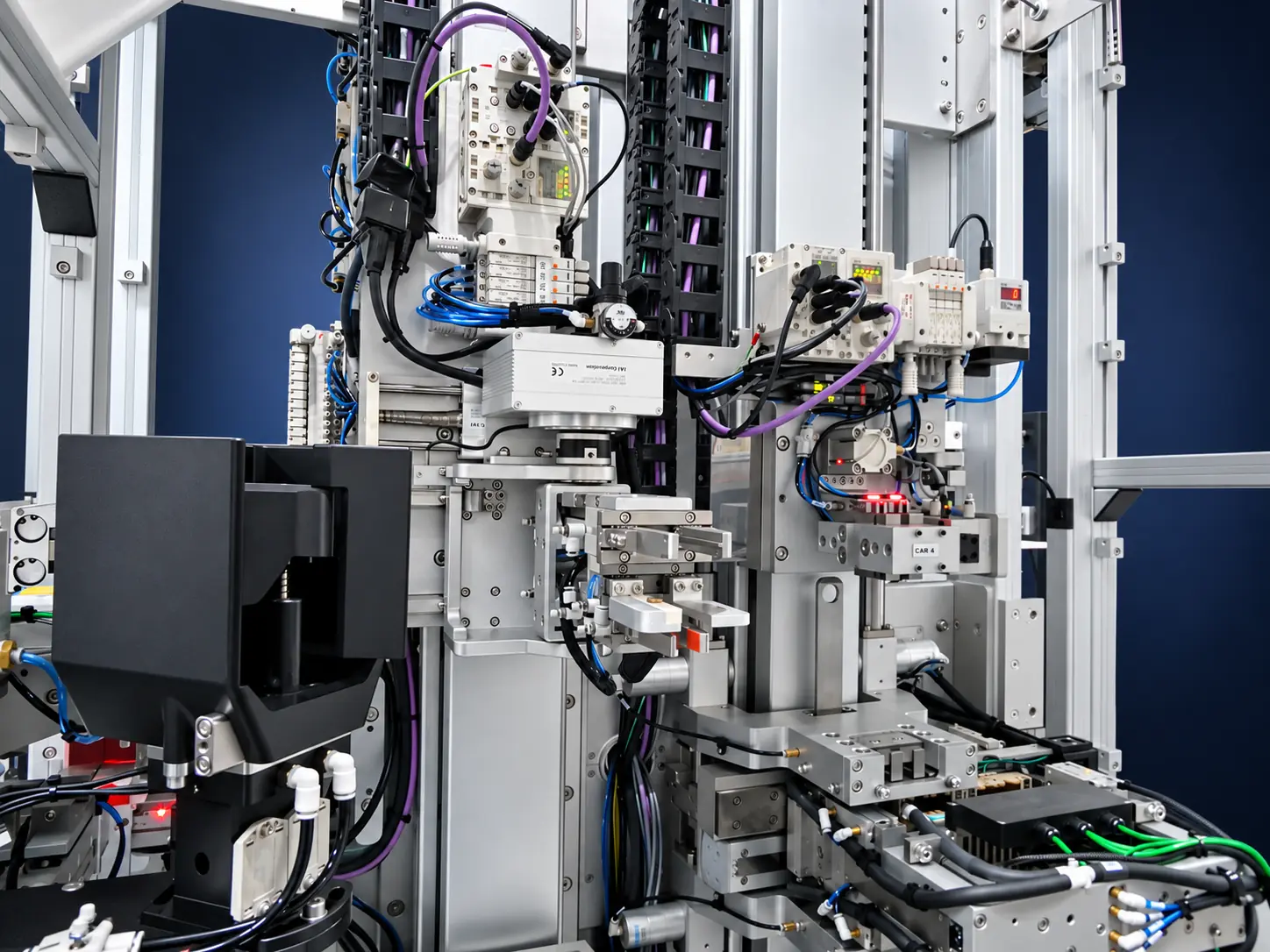
A special purpose machine is built around a particular task, product or process. Start by describing what happens today and what needs to improve. Useful inputs include the manual sequence, acceptable product variation, current bottlenecks and the intended production rate.
Separate essential requirements from preferences. A clear specification gives the machine builder and customer a common basis for evaluating the proposed solution.
Test The Uncertain Steps Early
Product feeding, gripping, joining and inspection can contain important unknowns. Proof-of-principle trials can help assess these steps before the full machine design develops. Representative samples and agreed trial criteria make the findings more useful.
CPS has a proof-of-principle capability for early feasibility work. The extent of trials and the deliverables should be agreed around the project.
Develop The Whole Machine
Mechanical design, electrical controls, software and operator interaction need to develop together. Consider product changeover, rejected-part handling, access for maintenance and recovery from interrupted cycles.
Machine safety and the intended use must be addressed by the project team throughout development. A robot or enclosure alone does not establish that a complete application is suitable.
Agree How Performance Will Be Demonstrated
Define the acceptance criteria before testing. Depending on the application, these may address cycle behaviour, product quality, inspection, repeatability, changeover and recovery. Record the conditions under which each result will be measured.
Factory acceptance testing, site testing and supporting documentation should follow the agreed scope. Equipment validation responsibilities need to be clear between the customer and supplier.
Plan Installation And Ongoing Use
Utilities, factory access, line interfaces, operator training and spare parts all influence handover. Include them in the plan rather than treating installation as a delivery date alone.
For custom machine building and industrial automation in Ireland, CPS brings design, manufacture, integration and support together in Tuam, Galway. Share the process and requirements to begin an application discussion.